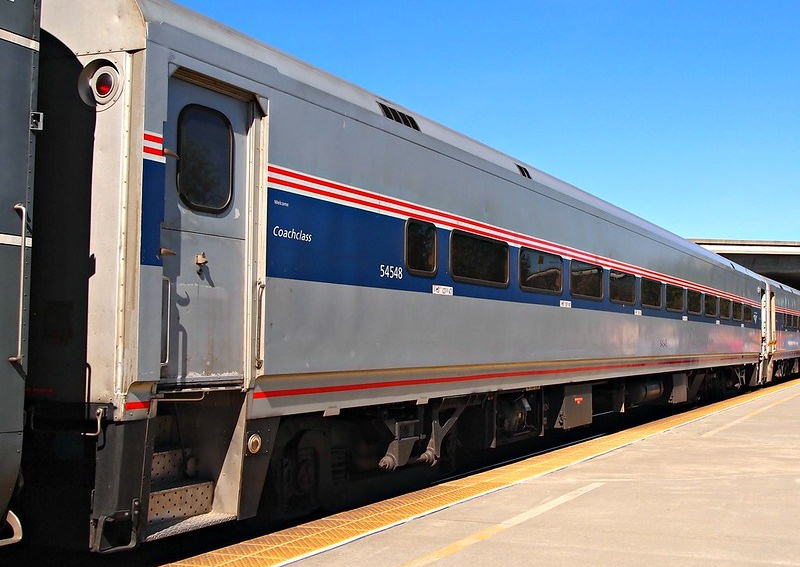
New to traveling on Amtrak? The U.S. passenger rail service provides a variety of train routes that can be used for commuting or long-distance trips. Since funding for train travel hasn’t been a priority in the United States, Amtrak has its pros and cons, but it still offers an old-fashioned, adventurous and sometimes easier way to travel. To make your experience better, here are key things to know:
1. Fares
The cheapest Amtrak fares are coach tickets, which offer unassigned seating. Simply board the train and choose any available seat in the coach or quiet car. Many regional routes also offer Business Class or First Class options, which cost more but include extra comfort and amenities. On long-distance overnight trains, travelers can book sleeping accommodations such as roomettes or bedrooms. These are the most expensive ticket types, but they provide added privacy and include meals during your journey.
To save money on Amtrak tickets, sign up to get an email when sales are announced. You might also qualify for everyday discounts. And if it works with your travel plans, buying in bulk or purchasing a USA or California rail pass might reduce overall cost.
If possible, book your tickets in advance (refunds apply in some cases if you need to cancel). Amtrak fares usually get more expensive the closer you are to the travel date.
2. Frequency
Amtrak routes fall into two main categories: long-distance trains and regional trains. Regional routes typically offer more frequent service, with multiple departures per day, especially in the Northeast Corridor, around Chicago, and throughout California. Long-distance routes, however, usually operate once per day in each direction, connecting major cities with scenic cross-country travel.
3. On-Time Arrivals
Because regional trains don’t travel as far as long-distance trains, they are more likely to be on time. Long-distance trains can have delays due to yielding to freight trains across the country (sometimes delays can be more than an hour). For that reason, don’t book an Amtrak trip if you have a very time-sensitive schedule unless you are traveling in the Northeast corridor or on another regional train. In terms of punctuality, here are the most on-time routes based on 2017 data:
- Hiawatha (Chicago-Milwaukee)
- Capitol Corridor (Northern California)
- Keystone (New York-Pennsylvania)
- Empire Service (Upstate New York)
- Ethan Allen Express (Upstate New York)
- Missouri River Runner (Missouri)
- Pennsylvanian (New York-Pennsylvania)
- Heartland Flyer (Oklahoma City-Fort Worth)
- Northeast Regional (Boston-Norfolk)
Lastly, don’t forget to look at Amtrak’s train tracker. You can see where your train is and view estimated real-time arrivals if a train gets behind schedule.
4. Baggage
You can check bags at some, but not all, Amtrak stations. Fortunately, you can bring personal items and larger bags on the train as long as you follow Amtrak’s carry-on baggage policy. You can look up station information on the Amtrak.com website.
For your carry-on items, luggage racks are above and under the seats in coach, and there are other storage areas for luggage, including in the sleeper cars on the lower level. Be sure to pay special attention to baggage guidelines if you are crossing into Canada on a train.
If you are traveling in a large group or need luggage assistance, look for the “red cap” desk or an Amtrak staff member wearing a red cap before your train arrives. They can help you find seats on the train and bring your bags on board (suggested tip between $10 and $20).
5. Food
Amtrak trains have a cafe car where you can buy snacks and light meals. Additionally, overnight trains have either a dining car with traditional meal service or a flexible meal service available to sleeper car passengers (meals are included in the ticket price). If you have a special diet, check out Amtrak’s special menus.
Otherwise, bringing food on the train is a good idea. A small cooler counts as a carry-on bag, and you can bring snacks, meals, take out food from nearby restaurants. See 10 essential things to pack for an Amtrak trip to learn more.


 US Train Travel Guide